
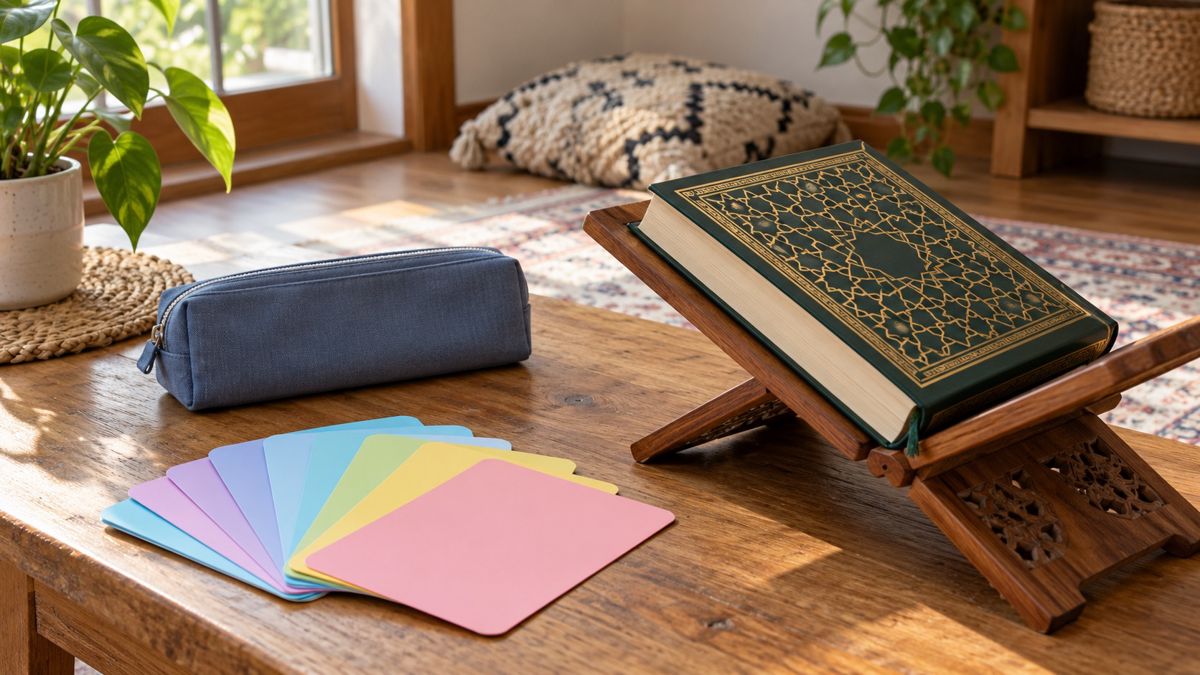
Short answer: learning Quran together as mother and child works well when each of you has your own space to learn, a small shared routine, and a gentle attitude to mistakes. You do not need to be at the same level. The goal is not to compete but to make Quran a normal, warm part of the day that you do side by side.
This guide offers practical ideas for mothers who want to learn with a son or daughter, whether you are both beginners or you already read and want to support your child.
Why learn together at all
Children copy what they see. A child who watches her mother open the Quran, practise a page and ask her teacher a question is learning something that no lesson plan can teach: that this is what people in her home do. Many mothers also find that learning alongside a child removes the awkwardness of being a beginner, because you are both on the journey.
There are practical benefits too. When you understand what your child is being taught, you can help at home with revision, remind her of the rule she learned, and notice when she is getting tired or discouraged.
Do not turn it into a competition
The biggest risk when mother and child learn together is comparison. A child who reads faster than her mother may feel proud, or a child who reads slowly may feel she is letting her mother down. Both reactions are unhelpful.
- Be open about the fact that you are both learning, and that each of you has a different pace.
- Praise effort and care, not speed. A line read slowly and correctly is worth more than a page read quickly.
- If you make a mistake in front of your child, treat it calmly. It teaches her that correction is normal and nothing to fear.
- Avoid comparing your child with siblings or with other children you know.
Separate classes or shared classes
There are two main ways to arrange it, and each suits different families.
- Separate private classes. Each of you has your own 30-minute class with the teacher, at a level that suits you. This is usually the better choice when your levels are very different, because neither of you has to wait or hurry.
- Classes at the same time of day. Some families book classes back to back, so that the whole household has a Quran hour. This builds a routine without forcing you into one lesson.
Whichever you choose, it helps to ask the academy how classes are arranged and what is possible before you enrol. We offer a 20 percent mother-and-child discount, and you can read the details on the mother and child bundles page.
Build a small routine at home
Learning together only works if it fits into ordinary days. A simple routine is far more reliable than a perfect plan that nobody follows.
- Pick one fixed time each day, even if it is only ten or fifteen minutes, such as after school or after maghrib.
- Sit together at a table, with the Quran or Qaida on a clean, raised surface and a notebook and pencil nearby.
- Let your child go first, then take your turn. Children enjoy being the one who goes first.
- Finish with something calm, such as a short dua or a story of the Prophets, so that practice ends on a warm note.
- Keep a simple sticker chart or a notebook where your child can see her progress, and add your own marks too.
When you are both beginners
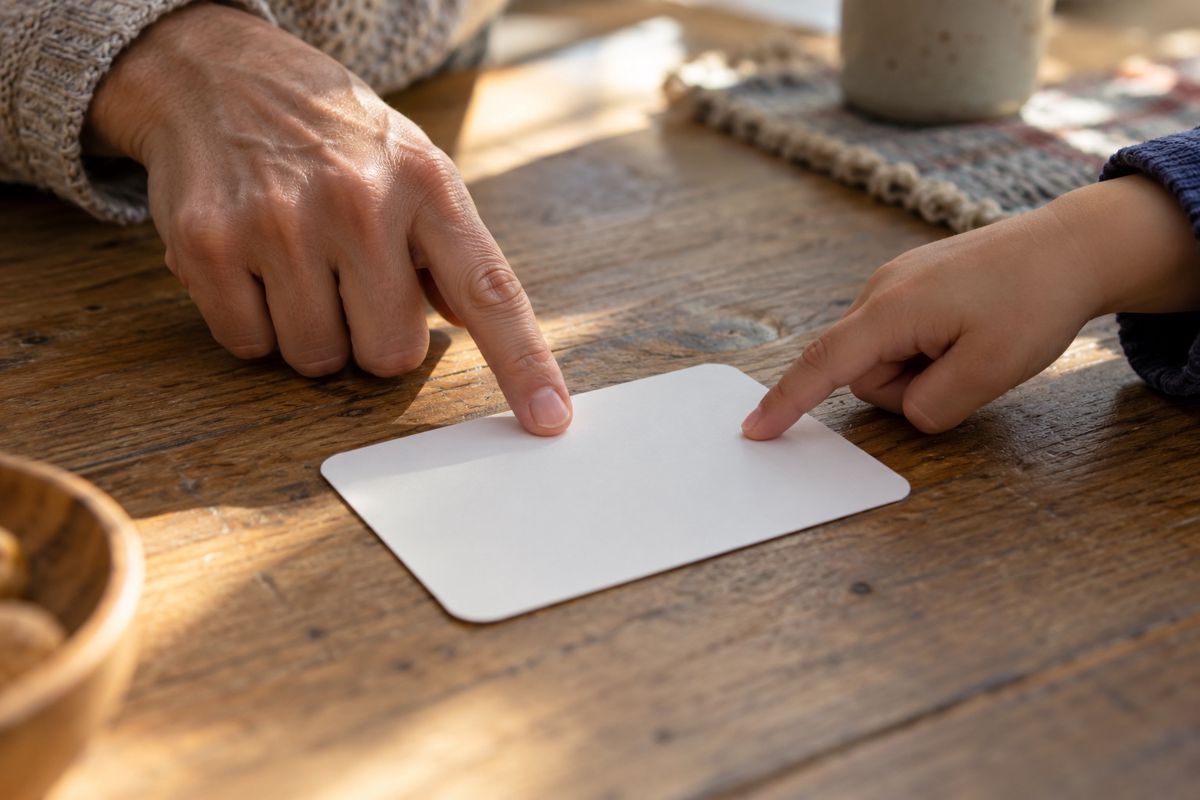
If neither of you can read Arabic yet, you can begin with the Noorani Qaida together: letters, their shapes and sounds, and the harakat. A beginner mother and a young child may even enjoy the process together, pointing at the same letter and saying it aloud. Do not worry if you find it harder than she does. Adults often find it easier to understand the rules but slower to produce the sounds, and children often do the opposite.
If you are an adult starting from the beginning, the teacher can set a pace for you that does not depend on your child's pace, and the other way round.
When you already read and want to help
If you can already read the Quran, you may simply want to support your child's practice without taking over. A few habits help.
- Listen first, then correct only one thing at a time, so that she does not feel overwhelmed.
- Ask her to tell you what her teacher said, rather than telling her what to do.
- Leave the teaching of tajweed rules to the teacher, and support revision at home.
- If you are unsure of a rule yourself, say so and ask the teacher, which is a good example for your child.
What to expect from the teacher
A good online class should be private, patient and clear. At Best Female Quran, classes are live one-to-one on Zoom with Ustadha Ayesha Azmat, who uses a digital pen and on-screen slides, with positive reinforcement and reward stickers for children, and daily duas, manners and stories of the Prophets included. Parents are welcome to sit nearby, and we suggest that a parent stays close for young children.
Progress depends on your child's age, practice at home and regularity. After the free trial class, the teacher will describe a realistic pace for each of you, which is better than a promise made before anyone has heard you read.
Making it last
The families who keep going are usually the ones who keep it light. Miss a day and begin again the next. Let your child choose a sticker. Celebrate small steps, such as a letter learned or a line read cleanly. Over weeks, the habit matters more than any single lesson.
If you would like to ask how mother-and-child classes could work for your family, message us on WhatsApp at +92 305 9637306 and tell us your child's age, your country and what each of you has learned so far.