
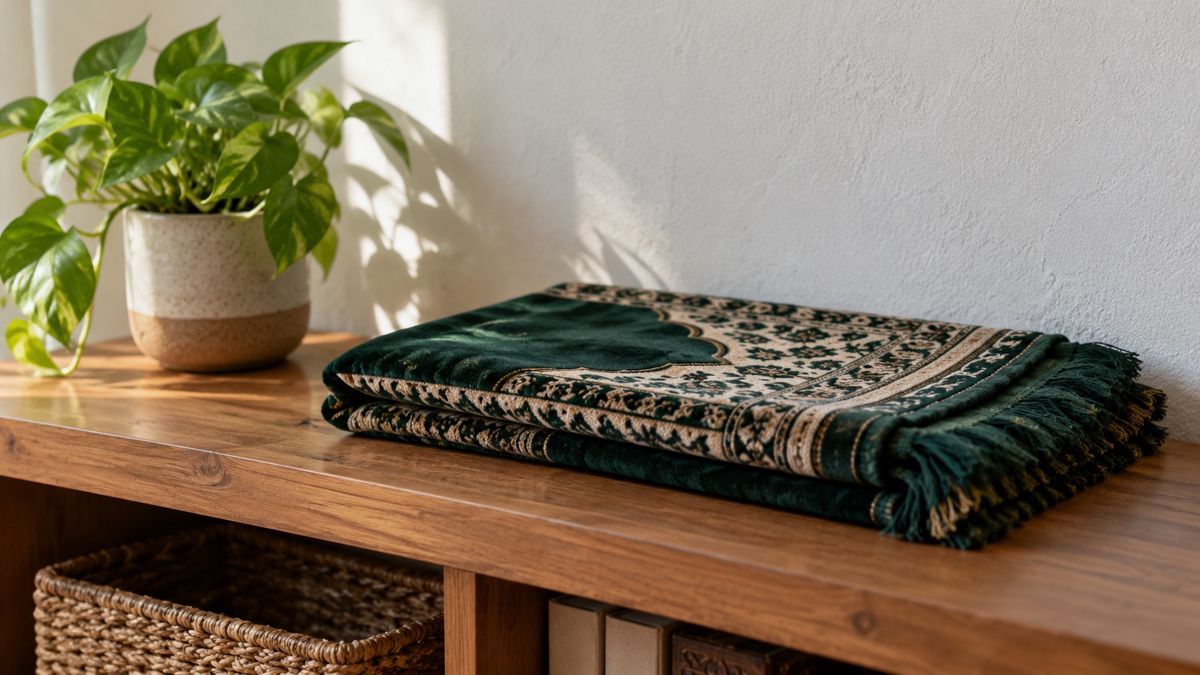
Short answer: many families choose a female Quran teacher for their daughters because it makes the class feel comfortable, private and easy to talk in. It is a personal choice, not a rule, and plenty of families are happy with either. If it matters to you, it is reasonable to look for it, and this guide explains the common reasons and what else to check besides.
The aim here is not to tell any family what to do. It is to help you think clearly about what your daughter needs in order to learn well, so that you can decide calmly and without pressure.
The most common reasons families give
Parents who prefer a female teacher for their daughters usually mention a handful of things. None of them is a guarantee of a better class, but they come up again and again.
- Comfort. Some girls, especially as they grow older, are shyer with a male teacher. A girl who feels at ease is more likely to read aloud, make mistakes and try again.
- Modesty and family preference. Some households simply prefer that their daughters are taught by a woman, in the same way they might prefer it for other activities. That is a perfectly normal family decision.
- Easier questions. Girls often have questions about wudu, salah, hijab or the changes of growing up. A female teacher may find it easier to answer gently, or to say that a question is better taken to a mother or a trusted scholar.
- Role model. A daughter who sees a woman reciting, teaching and explaining the Quran with confidence can come to see this as something that belongs to her too.
Comfort matters more than it sounds
Learning to recite means being heard, and being corrected, again and again. A child has to say a letter, hear that it is not quite right, and try once more in front of someone. That is easier when she does not feel embarrassed. A calm, friendly teacher who smiles, waits and encourages can make the difference between a child who looks forward to class and one who starts to avoid it.
For some girls that calm comes more naturally with a female teacher. For others it depends entirely on the personality of the teacher. This is why we always suggest a trial class: you can see how your daughter feels in the first few minutes, which tells you more than any description.
Privacy and the home setting
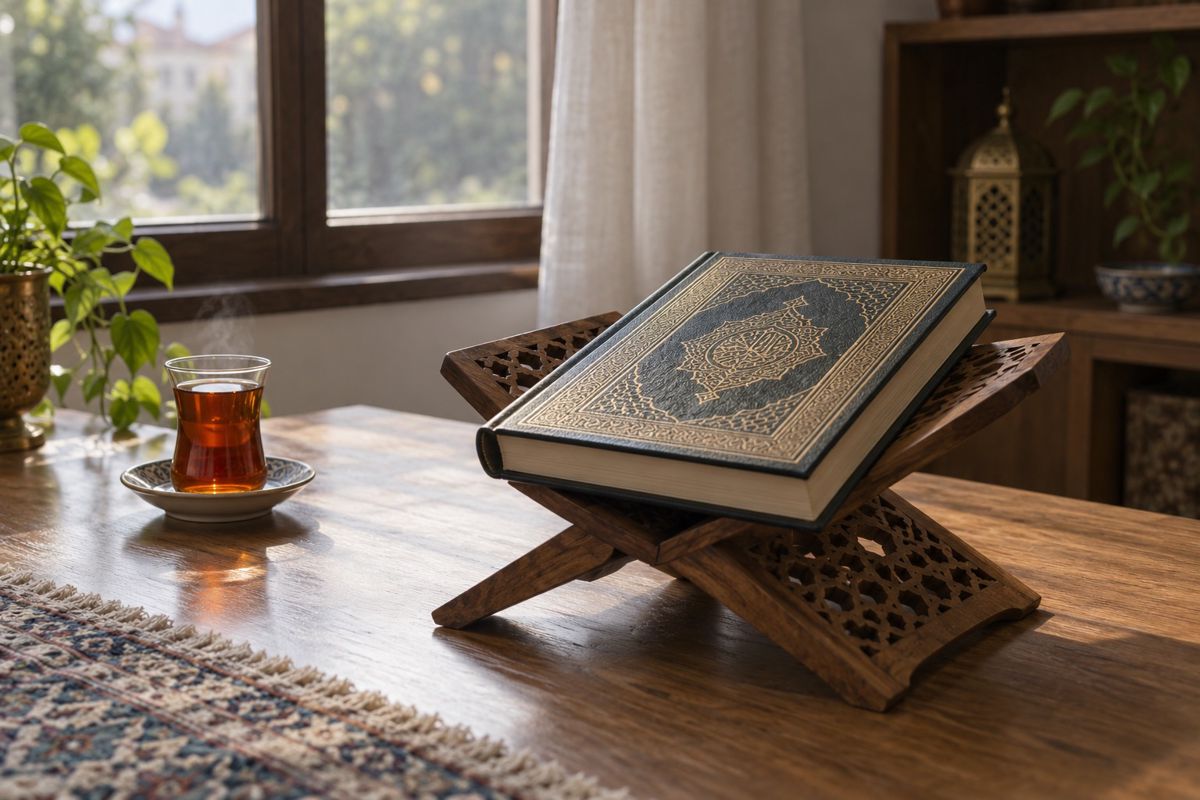
Online classes happen in your home, usually in a living room or a bedroom. Many parents feel more relaxed about a female teacher joining a class from that setting, particularly for older girls. Whatever your preference, a few simple habits help any online class feel safe and well organised.
- Choose a quiet, open part of the house, such as a dining table, rather than a closed bedroom.
- Keep the Quran on a clean, raised surface such as a rehal, and the tablet or laptop on a steady desk.
- For young children we suggest that a parent stays close, even if they are doing something else in the room.
- Parents are welcome to sit nearby and listen, and many find that it helps them support practice at home.
What a female teacher does not decide
It is worth being honest about the limits. You can read more about our approach on the page about why families choose a female teacher.
Teacher gender does not decide how well a child learns. A caring, patient teacher with sound training will usually help a child more than one who simply fits a preference. When you are choosing, look at the whole picture.
- Qualification. Ask what the teacher has studied and whether she holds an ijazah in Tajweed. A good teacher will be glad to explain this.
- Experience with children like yours. A child who does not speak Arabic at home needs a teacher who knows how to explain letters and sounds patiently, in a language the child understands.
- Teaching method. Private one-to-one attention, clear slides, regular revision and gentle correction all matter a great deal.
- Consistency. Regular classes with the same teacher help a child settle and build trust.
Language and cultural fit
Many families outside the Arab world find that a teacher who understands their daily life is a real help. A child in the USA, UK, Canada or Australia may hear English at school, Urdu or another language at home, and Arabic only in the Quran. A teacher who can explain in English and Urdu, as well as in Arabic, can bridge those worlds and avoid the confusion that comes when instructions are only given in a language the child does not know.
At Best Female Quran, Ustadha Ayesha Azmat teaches in English, Urdu and Arabic. She holds the Alimah Fazilah qualification, which is the eight-year Dars-e-Nizami course, and an ijazah with a sanad in Tajweed-ul-Quran, Hafs 'an 'Asim. She has experience teaching children outside the Arab world who do not speak Arabic at home. You are always welcome to ask for the details of the qualification on WhatsApp.
How to decide for your own family
If you are unsure, it can help to ask yourself a few simple questions and talk them through with your daughter.
- Would my daughter feel more relaxed with a female teacher, and has she said anything about it?
- Is this mainly her comfort, or a family preference, or both? Both are fine.
- What do I want her to learn first: letters and reading, tajweed, memorisation, or the basics of daily worship?
- How much time can she practise at home each day, and who will sit with her?
There is no need to rush. Ask your questions, request a free trial class, and watch how she responds. The trial is arranged through the form or on WhatsApp, subject to teacher availability, and the teacher will describe a realistic pace for your daughter after the class. Progress depends on her age, her practice at home and how regularly she attends, so nobody can promise a timeline in advance.
If you would like to talk it through, message us on WhatsApp at +92 305 9637306 and tell us your daughter's age, your country and what she has learned so far.